The Unexpected Discovery That Affirmed Confidence in God’s Word
On a cold February afternoon in Jerusalem in 1948, a quiet discovery shed fresh historical light on the ancient words behind the Bible we read today.
For centuries, the oldest widely available complete Hebrew manuscripts of the Old Testament dated to around AD 1000. While these texts were carefully preserved, a lingering question remained. How closely did they reflect the original writings faithfully copied thousands of years earlier?
That question would soon find its answer.
The Scrolls Are Examined
In late 1947, Bedouin shepherds stumbled upon clay jars hidden in caves near the Dead Sea. Inside were ancient scrolls, fragile and darkened with age. At first, few realized their significance.
On February 18, 1948, a Syrian Orthodox monk named Father Butrus Sowmy (also known as Boutros Sowmy) contacted the American Schools of Oriental Research (ASOR) in Jerusalem. The following day, he brought several of the scrolls to the ASOR.
There, a young scholar named John C. Trever was asked to examine them.
With no specialized equipment available, Trever photographed the manuscripts using a desk lamp and a handheld camera. As the film developed, he noticed something astonishing. The style of Hebrew script was far older than anything he had ever seen.
These were not medieval copies.
They were ancient.
A Thousand-Year Discovery
Trever sent the photographs to Dr. William F. Albright, widely regarded as the leading biblical archaeologist of the day.
Albright immediately recognized the handwriting as belonging to the late Hellenistic period, dating the Isaiah scroll to around 100 BC.
In an instant, scholars were looking at Hebrew biblical manuscripts dating more than 1,000 years earlier than any they had previously examined.
For the first time, scholars were holding copies of Scripture written centuries before the time of Christ.
A Test Case: Isaiah 53
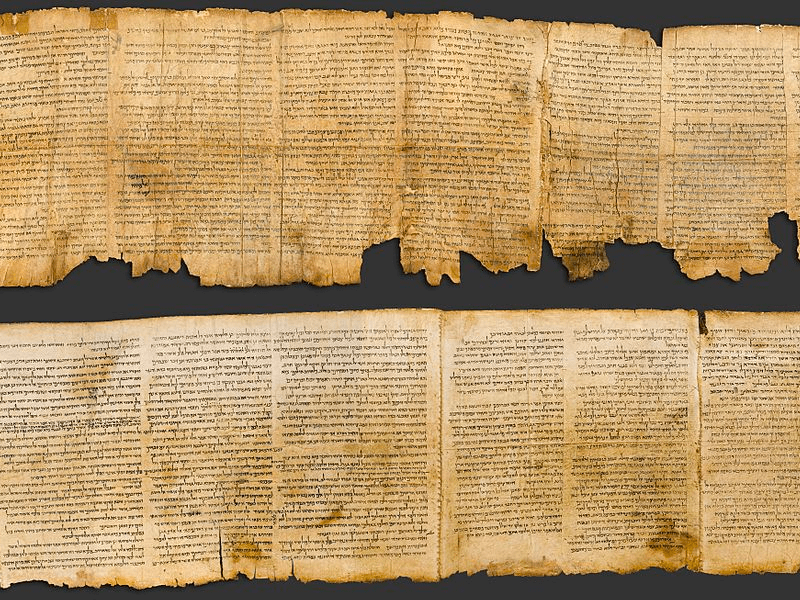
Among the most remarkable discoveries was the Great Isaiah Scroll.
When scholars compared this scroll, dated to approximately 125–100 BC, with the Masoretic Text that underlies the Hebrew text used in Old Testament translations, the results were striking.
A commonly cited early analysis of Isaiah chapter 53 notes that, out of 166 words, only 17 letters showed variation from the Masoretic Text. Most of these were minor spelling or orthographic differences, such as fuller (plene) spellings, that did not affect meaning. Only a few involved very small stylistic variations, such as the presence or absence of a conjunction.
Across more than two millennia, the message remained remarkably intact.
The words had been preserved with extraordinary care.
In addition to confirming the Masoretic tradition we use today, the scrolls also preserve ancient textual features that help scholars understand the history of how the Old Testament was translated into Greek and other languages.
Why This Discovery Matters
The Dead Sea Scrolls did not create the Bible, nor did they change its message.
What they did was confirm something profoundly reassuring.
The Scriptures we read today were not gradually altered in ways that changed their essential meaning. The same words written by the prophets were faithfully copied and passed down century after century.
As Dr. Albright later observed, the evidence for the accurate transmission of the biblical text was “nothing short of miraculous.”
Biblehub.com
 Emmaus Gospel Outreach